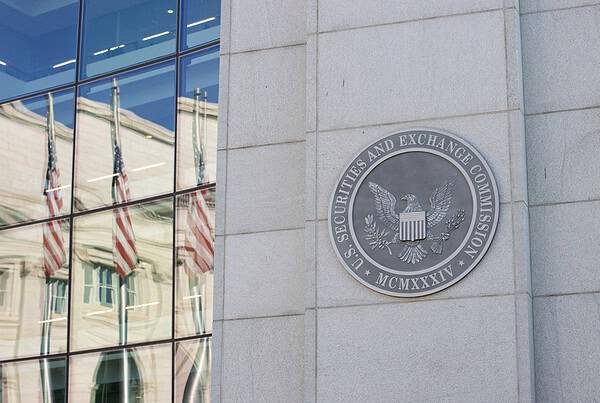

On January 15, 2026, the Division of Investment Management staff updated its Marketing Compliance Frequently Asked Questions, providing additional clarity on two important aspects of Rule 206(4)-1 under the Advisers Act:
- The use of model fees when presenting net performance, and
- Disqualification considerations for compensated testimonials and endorsements.
The updated FAQs are available here and new sections are excerpted below:
Marketing Compliance – Frequently Asked Questions
Use of Model Fees (posted Jan. 15, 2026)
Q: Would an investment adviser violate the general prohibitions of Rule 206(4)-1(a) by advertising the net performance of a portfolio that reflects the deduction of the actual fees charged to the portfolio (“actual fees”), when the fees to be charged to the advertisement’s intended audience (“anticipated fees”) are anticipated to be higher than the actual fees charged?
A: The marketing rule’s definition of “net performance” includes (i) a portfolio’s performance after the deduction of all fees and expenses actually paid by a client or investor, and (ii) the portfolio’s performance after the deduction of a model fee, subject to certain conditions. In some circumstances, however, it may be inconsistent with the rule’s general prohibitions to solely present net performance reflecting actual fees.
Specifically, footnote 590 of the adopting release focuses on differences between actual fees charged historically and the anticipated fees to be charged. It states that, when presenting net performance in an advertisement, “[i]f the fee to be charged to the intended audience is anticipated to be higher than the actual fees charged, the adviser must use a model fee that reflects the anticipated fee to be charged in order not to violate the rule’s general prohibitions.”
Some advisers in this situation have interpreted footnote 590 to categorically require the presentation of net performance calculated using a model fee and to prohibit the presentation of net performance calculated using actual fees.
The Commission noted in the adopting release that the general prohibitions are intended to “provide appropriate flexibility and regulatory certainty for advisers considering how to market their investment advisory services” and “[i]n applying the general prohibitions, an adviser should consider the facts and circumstances of each advertisement.” In the staff’s view, whether the use of actual fees violates the general prohibitions depends on all of the facts and circumstances of a specific advertisement, including, but not limited to, relevant disclosures. The staff’s view is that advisers may use various means to illustrate the effect of differences between actual fees and anticipated fees on performance.
Testimonials and Endorsements – Disqualification for Self-Regulatory Organization Final Orders (posted Jan. 15, 2026)
Q: Would the staff recommend enforcement action if an investment adviser compensates a person for a testimonial or endorsement when that person was subject to the entry of a final order by a self-regulatory organization of the type described in section 203(e)(9) of the Advisers Act within the prior 10 years and that person has not been barred or otherwise suspended from acting in any capacity under the rules of that self-regulatory organization?
A: Rule 206(4)-1(b)(3) prohibits an investment adviser from compensating a person, directly or indirectly, for a testimonial or endorsement if the adviser knows, or in the exercise of reasonable care should know, that the person giving the testimonial or endorsement is subject to any disqualifying event (as defined in the marketing rule) within 10 years prior to the person disseminating an endorsement or testimonial. Such an event includes the entry of any final order by a self-regulatory organization (as defined in the Form ADV Glossary of Terms) based on violations of any laws or regulations that prohibit fraudulent, manipulative, or deceptive conduct.
The definition of “disqualifying event” excludes a Commission order or opinion that does not bar, suspend, or prohibit the person subject to the order from acting in any capacity under the federal securities laws, provided that the person is in compliance with the terms of the opinion or order, and the advertisement includes certain disclosures about the disciplinary event. The Commission explained that it adopted this exclusion because, “when the Commission has issued an opinion or order with respect to a person’s disqualifying conduct but not barred or suspended the person or prohibited the person from acting in any capacity under the federal securities laws, it is appropriate to . . . permit such person to engage in activities related to compensated testimonials and endorsements,” provided that certain conditions are met.
Following this rationale, if a self-regulatory organization has issued an order with respect to a person’s disqualifying conduct but did not bar or suspend the person or prohibit such person from acting in any capacity in connection with that disqualifying conduct, the staff will not recommend enforcement action if such person engages in activities related to compensated testimonials or endorsements, provided the same conditions are satisfied.
Specifically, the staff would not recommend enforcement action to the Commission under Rule 206(4)-1(b)(3) if an investment adviser compensates a person for a testimonial or endorsement who the adviser knows, or in the exercise of reasonable care should know, was subject to the entry of a final order by a self-regulatory organization of the type described in section 203(e)(9) within 10 years prior to the person disseminating an endorsement or testimonial, provided that:
- The sole reason the person is an ineligible person (as defined in the marketing rule) is the self-regulatory organization’s final order;
- The self-regulatory organization did not expel or suspend the person from membership, bar or suspend the person from association with other members, or prohibit the person from acting in any capacity;
- The person is in compliance with the terms of the self-regulatory organization’s final order, including, but not limited to, paying disgorgement, prejudgment interest, civil or administrative penalties, and fines; and
- For a period of 10 years following the date of such final order, any advertisement containing the testimonial or endorsement discloses that the person providing the testimonial or endorsement is subject to a self-regulatory organization order, and includes the order, or a link to the order on the self-regulatory organization’s website or other public disclosure system, if available.
Practical Considerations
Investment Advisers should review current and planned marketing materials in light of this guidance, particularly where net performance is calculated using actual fees that differ from anticipated fees, or where compensated testimonials or endorsements are used.
If you have questions about how these FAQ updates affect your marketing practices, or if RQC Group can assist with reviewing or updating your marketing compliance framework, please do not hesitate to reach out to us.